The AI interface to the local economy.
A sentence in any language in, a booked local service out. Canciero is distributed through QR codes in the apartments and hotels where travellers already stay, and paid for by the providers who fulfil the order.
A visitor spends a week inside an economy they cannot reach.
In emerging markets the underlying data is broken. Many local businesses aren't on Google Maps, listings are stale and reviews are too thin to trust — so a general-purpose AI fills the gaps by inventing plausible answers. Verified local supply is the product.
The average visitor to Georgia stays 6.3 nights (Geostat, Q3 2025). That is a full week of needs — transport, childcare, health, activities — with no single, trustworthy place to ask and nobody obliged to answer.
One chat. Any language. A real order at the end.
An AI local concierge for visitors, expats and people relocating. No categories, no filters, no app to install. The guest stops learning how the local market works and simply says what they need.
Scan
A QR plate on the door, a fridge magnet, a stand at reception. Every connected room is a permanent point of demand.
Ask
The guest writes or speaks in their own language. The AI understands intent and collects the parameters.
Order
A structured order is routed to a verified provider, who accepts it with one tap in a bot or dashboard.
Fulfil
The provider delivers the service and pays a commission. The property that sent the guest earns a share.
"I can arrange this for you."
When we have a verified partner, the AI collects the details and creates the order end-to-end.
A useful answer — and a demand signal.
When we don't yet, the guest still gets help, and we learn exactly which supply to sign next.
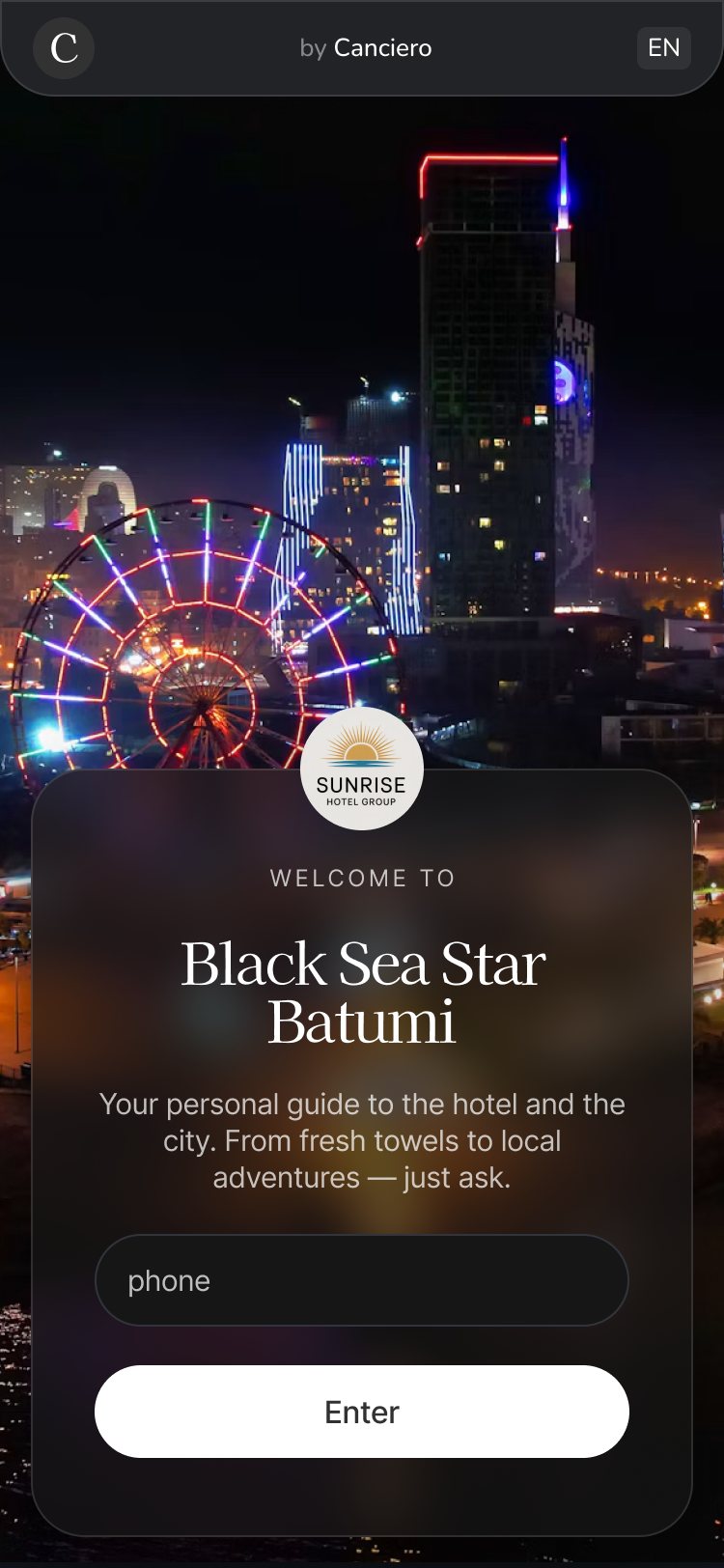
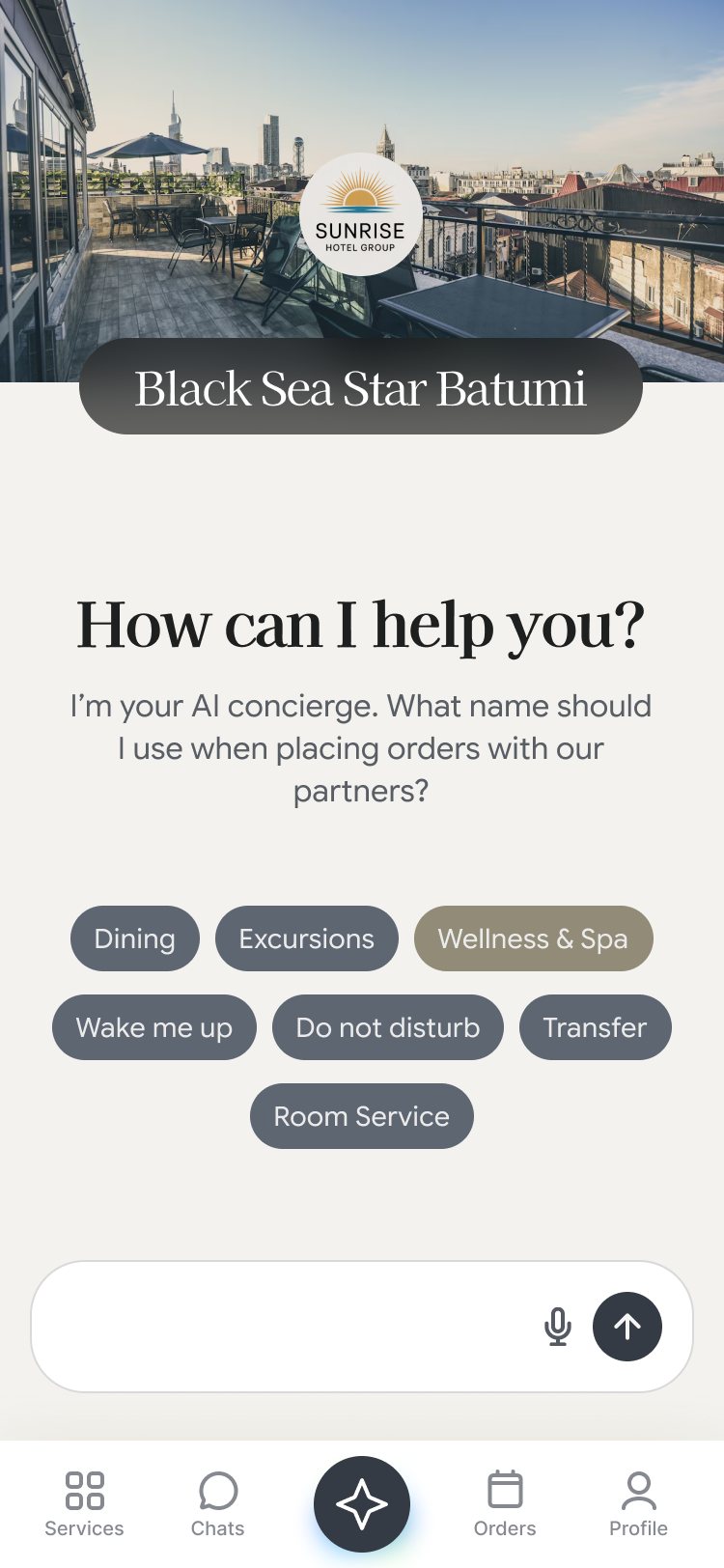
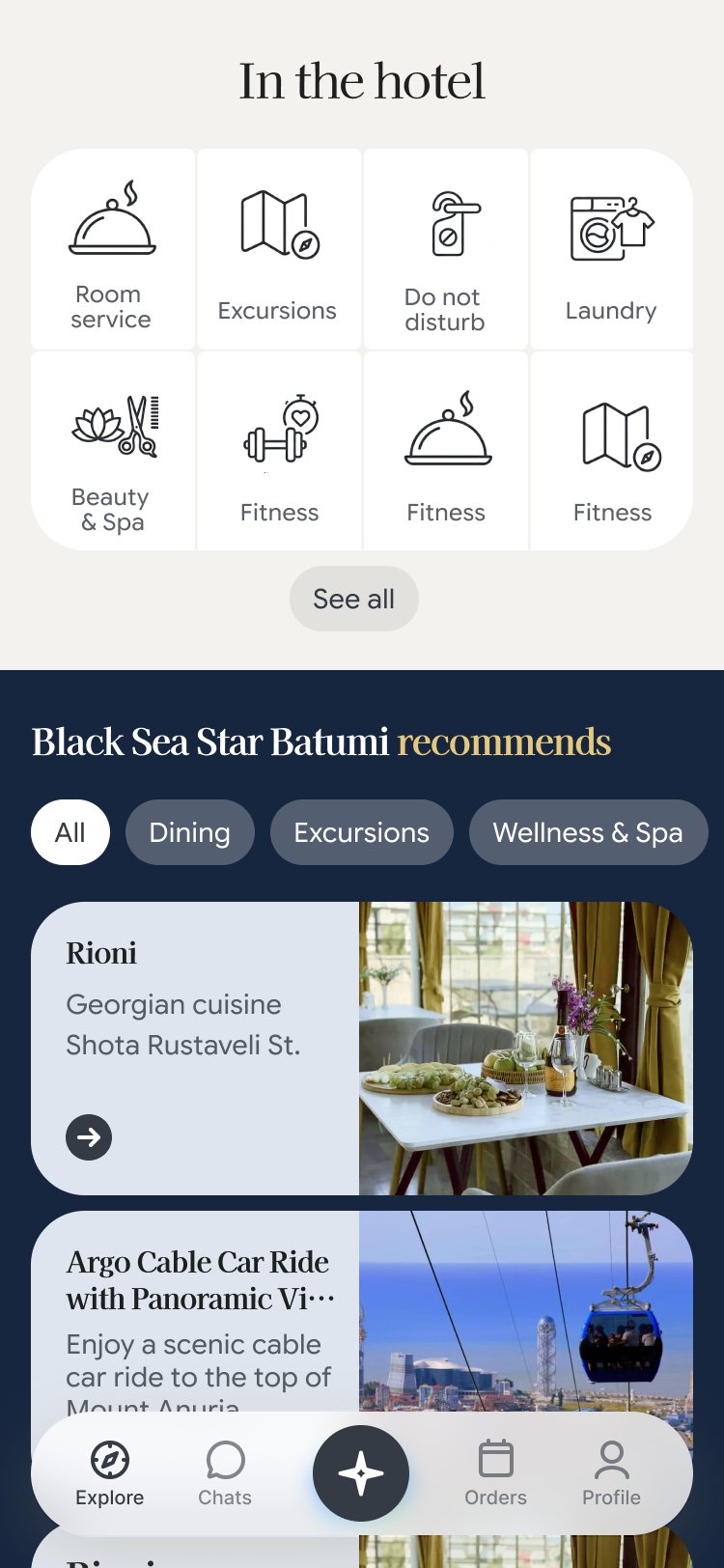
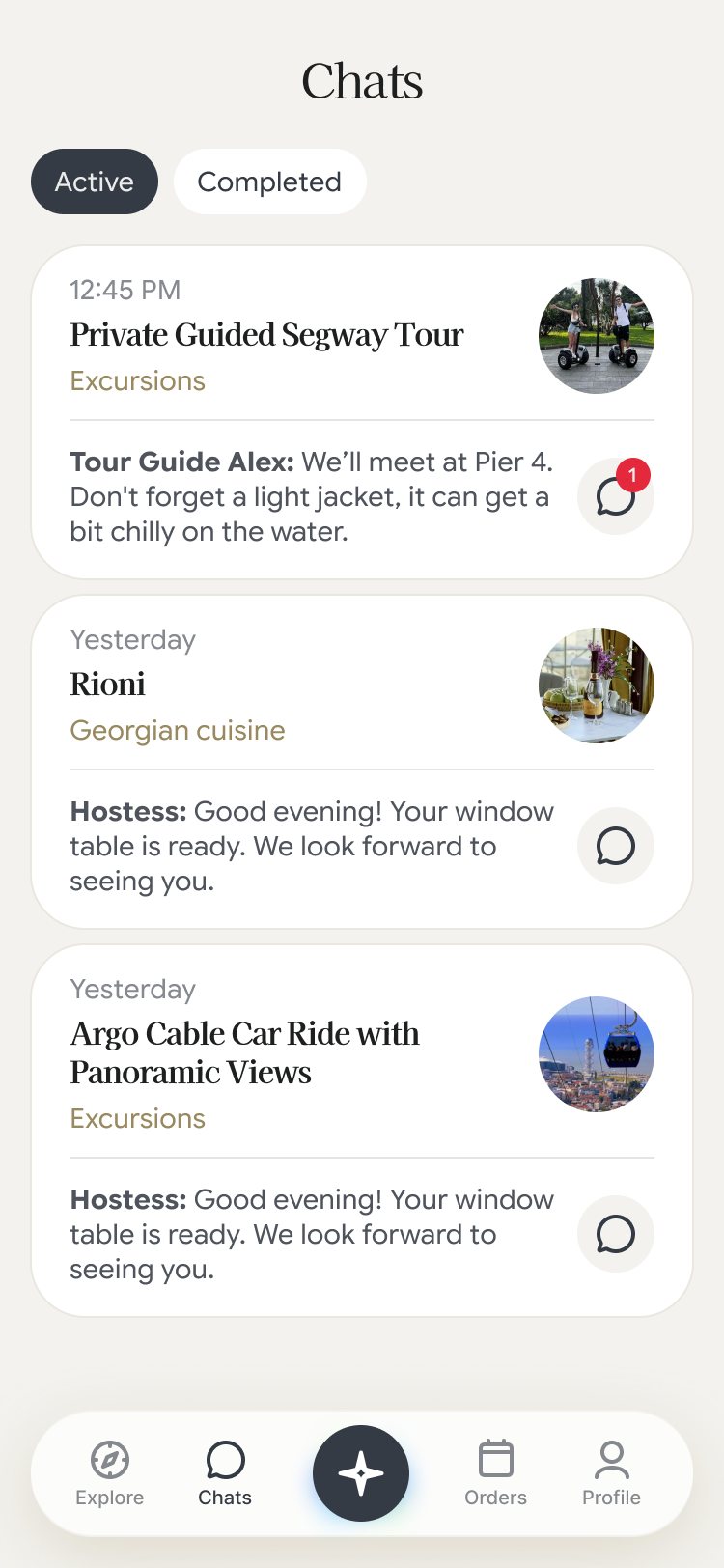
One family. One QR code. Five transactions.
By day three the AI already knows the group, the children and the car — so it never asks twice. Prices are live Batumi rates, September 2026.
Airport transfer
Car rental, 3 days
Mountain day trip
Kids activity
Airport transfer
Three things became true at once. None were true five years ago.
The interface got cheap
Small frontier models now cost cents per conversation. In 2021 this product would have been forms, menus and scripted flows.
The distribution opened
Gross rental yields fell from 10% (2023) to 7.4% (2025) and are forecast toward 3.4–5.1%. Owners need ancillary revenue — and are willing to place our codes.
Capital validated the category
$152.6m went to AI guest-experience platforms — all of which sell software to one property at a time. We don't.
Sources: OpenAI API pricing; TBC Capital Batumi housing report; Hotel Dive / Abode Worldwide funding review.
Sized from connected units upward — not from a percentage of a country.
75.8% of what international visitors spend in Georgia goes outside the hotel bill. Batumi alone draws 2.6m international visitors — 23% of the country's tourist flow.
$4.4bn visitor spend
Georgia's non-accommodation international visitor spend, 2025: 15.0bn GEL total, 75.8% of it outside the hotel bill.
$579m GMV · $87m commission
Batumi: 2.6m visitors × $637 non-accommodation spend × 35% a concierge can actually book, at 15% provider commission.
$3.3m GMV · $248k revenue
Year 3: 8,000 connected apartments and 30 hotels — just 0.29% of the SAM.
Sources: Geostat 2025; Georgian National Tourism Administration 2025; TBC Capital. Bookable share and commission rate are our assumptions — the MVP exists to replace them with measured numbers.
The provider pays. The property that sent the guest takes half.
The guest pays nothing extra. Tour operators already pay 20–30% to Viator and GetYourGuide; we model 15%, split evenly with the property. At $0.03 per stay, contribution margin on the AI layer is 99.8%.
Orders in chat
Pays the provider directly. Zero platform fee.
Fulfils the service
Pays ~15% commission on a qualified order.
Split the commission
The property earns new revenue from guests it already has.
Scan rate is the single biggest lever: moving it from 25% to 40% lifts revenue by 60%. Volumes from AirROI Batumi occupancy (33.3%) and branded-hotel occupancy (71%).
Distribution is already agreed. That's the hard part of a marketplace.
Distribution partners agreed to place our QR codes: a property management company, a major Batumi developer and a real estate agency.
Decision-makers at Batumi development companies reachable directly, from five years working this market.
Developer relationships in our own CRM, plus a founder community run through Unicorn Embassy in Batumi.
Everyone is building the concierge. Nobody owns the doorway.
The model is a commodity — competitors can call the same API tomorrow. The moat is physical distribution points, verified local supply, and transaction data that neither Google nor a hotel SaaS can see.
Every QR plate is a distribution point a competitor has to negotiate for, property by property.
Onboarded, checked local providers in markets where online data is sparse and unreliable.
Every unmet request tells us what to sign next — a dataset no hotel SaaS or map sees.
Prove one city. Then copy the playbook.
Batumi is the lab: dense short-term rental supply, multilingual visitors and founders with direct access to the developers who control the buildings.
MVP & pilot
- Web chat, order flow, provider bot
- First QR placements with signed partners
- Measure scan → chat → order
Density in Batumi
- 600 connected units
- 5 transacting supply partners
- Categories ranked by real demand
Hotels & Georgia
- Hotel channel at scale
- Tbilisi and the Black Sea coast
- Proven unit economics
Emerging resort markets
- Bali and Turkey — markets the founder has lived and worked in
- Open API for AI agents and robotic services
Market access and engineering under one roof.
Sergey Ermakov
Co-founder · Product & Go-to-marketMedia and marketing for investment resort real estate; has lived and worked in Indonesia, Turkey and Georgia, with five years in the Batumi market. Former fractional CMO for Georgian developers; ex Admitad (Mitgo) startup incubator. Runs founder events at Unicorn Embassy, Batumi.
Anton Platonov
Co-founder · EngineeringCo-founder of GE DNT Digital, the software development company building the Canciero platform in-house.
Anton Vlasov
Co-founder · EngineeringCo-founder of GE DNT Digital. Leads platform delivery alongside Anton Platonov — no outsourced build, no agency margin.
Our unfair advantage
Marketplaces usually die on distribution. We start with it: a CRM of 40+ developers, direct lines to 60 decision-makers, and an in-house engineering team — so the pre-seed money goes into proving demand, not buying access.
Pre-seed, for 18 months of runway to put a working concierge behind 600 connected units in Batumi — and answer the one question that decides this business: do guests scan, chat and buy?
What we want from an accelerator
- Marketplace mentors who have solved the cold-start problem on the supply side
- Hospitality and travel partners for the hotel channel
- Investor introductions for the pre-seed round
- Rigour on measurement: designing the pilot so the numbers are decision-grade
Every room is a doorway to the city. We're putting an AI behind it.
Happy to walk you through the product, the pilot design and the numbers.